Engine Diagnostics in Monroeville, PA
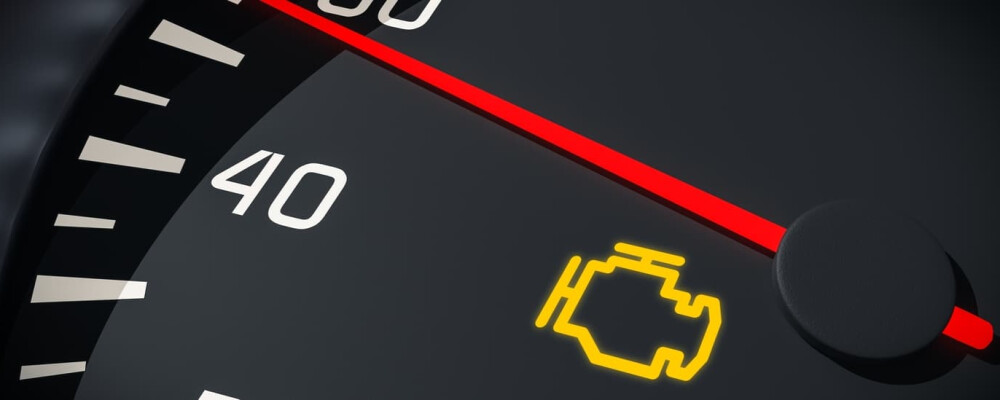
Few things are more unsettling than glancing at your dashboard and seeing the check engine light glowing back at you. It could mean something minor, or it could be the first warning of a developing problem that will become significantly more expensive if ignored. Either way, the only way to know for certain is a professional diagnostic evaluation. At #1 Cochran Mazda Monroeville, our factory-trained technicians use Mazda-specific diagnostic equipment to read fault codes, analyze live sensor data, and pinpoint exactly what your vehicle is telling you — so you get accurate answers and the right repair the first time, not guesswork.
How Modern Engine Diagnostics Work from Professional Technicians
Today's Mazda vehicles are equipped with a sophisticated onboard diagnostic system known as OBD-II, which has been standard on all passenger vehicles sold in the United States since 1996. Your Mazda's powertrain control module — the primary onboard computer — continuously monitors dozens of sensors throughout the engine, transmission, emissions system, and drivetrain. These sensors measure everything from oxygen content in the exhaust and engine coolant temperature to fuel injector timing, ignition performance, and mass airflow. When a reading falls outside the acceptable range, the control module stores a diagnostic trouble code and illuminates the appropriate warning light on your dashboard.
Here's the critical distinction that separates a professional diagnostic evaluation from a simple code read: a trouble code tells a technician which system or circuit triggered the fault, not specifically what part has failed or why. A code for a misfiring cylinder, for example, could point to a faulty ignition coil, a bad spark plug, a clogged fuel injector, low compression, a vacuum leak, or a timing issue — among others. Resolving the problem correctly requires a trained technician who can interpret the code in context, test the identified circuit, analyze live data streams, and perform targeted component testing. At #1 Cochran Mazda Monroeville, that's exactly the process our team follows on every diagnostic visit.
What the Check Engine Light Is Actually Telling You
The check engine light is one of the most widely misunderstood indicators on a vehicle's dashboard. Some drivers ignore it for months. Others assume the worst and fear a major repair. In reality, the check engine light covers an enormous range of possible issues — from something as simple as a loose gas cap to something as serious as a catalytic converter failure or a misfiring engine. The light itself tells you nothing about severity; only a diagnostic scan can do that.
There is one important distinction worth knowing: a steadily illuminated check engine light indicates a fault that has been detected and stored, but the vehicle may still be drivable in the short term while you arrange service. A flashing or blinking check engine light is a more urgent signal — it typically indicates an active, severe misfire that is forcing raw fuel into the catalytic converter, which can cause permanent and expensive damage to the emissions system within miles. If your check engine light is flashing, reduce your speed, avoid hard acceleration, and bring your Mazda in for service immediately rather than waiting.
Other dashboard warning lights — including the oil pressure warning, coolant temperature light, and TPMS indicator — each point to their own specific systems and should also be addressed promptly. Our diagnostic process covers all active warning lights, not just the check engine light.
Common Issues Uncovered During Engine Diagnostics
While every diagnostic evaluation is unique to the vehicle and its driving history, certain issues come up frequently when Mazda owners bring their vehicles in for a check engine light or performance concern. Some of the most common findings include:
- Oxygen sensor faults — O2 sensors monitor the oxygen content in your exhaust to help the engine control module fine-tune the air-fuel mixture. A failing oxygen sensor is one of the most common check engine light triggers. Left unaddressed, a faulty O2 sensor can cause the engine to run rich or lean, reducing fuel economy by as much as 40% and potentially damaging the catalytic converter over time.
- Catalytic converter degradation — The catalytic converter reduces harmful emissions by converting exhaust gases into less toxic compounds. When it becomes clogged or chemically depleted — often as a downstream consequence of ignored oxygen sensor or misfire faults — it sets its own fault code and must be replaced. Catalytic converters are expensive components, making early detection of upstream issues especially valuable.
- Engine misfires — A misfire occurs when one or more cylinders fail to complete a proper combustion cycle. Causes include worn spark plugs, failing ignition coils, dirty or clogged fuel injectors, low compression, or vacuum leaks. Misfires cause rough idling, poor acceleration, reduced fuel economy, and — if severe — the flashing check engine light described above.
- Mass airflow sensor faults — The MAF sensor measures the volume and density of air entering the engine so the control module can calculate the correct fuel delivery. A dirty or failing MAF sensor causes rough idling, hesitation, poor fuel economy, and difficulty starting.
- Evaporative emission system leaks (EVAP) — The EVAP system captures fuel vapors from the gas tank and routes them back into the engine rather than releasing them into the atmosphere. A loose gas cap is the most common EVAP fault, but cracks in hoses, a failed purge valve, or a damaged charcoal canister can also trigger this code.
- Thermostat and cooling system faults — A stuck-open thermostat prevents the engine from reaching normal operating temperature, reducing fuel economy and increasing emissions. A stuck-closed thermostat causes rapid overheating, which is one of the most destructive conditions a gasoline engine can experience.
- Variable valve timing (VVT) system faults — Mazda's SKYACTIV engines use variable valve timing to optimize performance and efficiency across different operating conditions. Faults in the VVT solenoids or oil control valves can cause rough running, power loss, and poor fuel economy, and require specialized diagnostic procedures to accurately identify.
Why Mazda-Specific Diagnostic Equipment Matters
Not all diagnostic tools are created equal. Generic OBD-II code readers — the kind available at auto parts stores for a modest price — can retrieve basic powertrain fault codes, but they access only a fraction of the data your Mazda's control modules actually contain. Mazda vehicles have multiple control modules beyond the powertrain module, including those governing the body, chassis, supplemental restraints, advanced driver assistance systems, and more. A generic reader cannot communicate with most of these modules, which means it can miss faults entirely or provide an incomplete picture of what's happening in the vehicle.
At #1 Cochran Mazda Monroeville, we use Mazda's factory diagnostic software and dealer-level scan tools that communicate with every module in your vehicle. This gives our technicians access to live data streams from all sensors, Mazda-specific fault code definitions that go beyond generic descriptions, bi-directional control capabilities to activate and test individual components, and software update functions to address known issues through calibration or programming. The difference between a dealer-level diagnostic and a generic code read is the difference between a precise diagnosis and an educated guess.
Frequently Asked Questions About Engine Diagnostics
Q. Can I ignore a check engine light if my car seems to be running fine?
We strongly advise against it. Many faults that trigger the check engine light have no immediately noticeable effect on how the vehicle drives — but they are actively degrading other components or reducing efficiency every mile you drive. A failing oxygen sensor, for example, may not affect drivability at first, but it can ruin a catalytic converter within tens of thousands of miles if ignored, turning a relatively inexpensive repair into a very expensive one. Prompt diagnosis is almost always the more cost-effective path.
Q. Will the check engine light turn off on its own?
Sometimes. If the fault was intermittent — such as a loose gas cap that was subsequently tightened — the control module may clear the code automatically after a set number of successful drive cycles without detecting the fault again. However, the underlying issue has not necessarily been resolved, and the light may return. In many cases, an active fault will keep the light illuminated until the problem is repaired. Clearing codes without fixing the root cause only resets the countdown until the light comes back on. A proper repair is the only reliable solution.
Q. Is a diagnostic scan the same as a repair?
No — a diagnostic evaluation identifies what is wrong; the repair is a separate step that addresses it. Think of diagnostics as the medical examination before the treatment. At #1 Cochran Mazda Monroeville, we perform a thorough diagnostic evaluation first and provide you with a clear explanation of our findings and a detailed estimate for any recommended repairs before any work begins. You are always in control of what gets approved, and we never proceed with repairs without your explicit authorization.
Q. My check engine light came on right after I got gas. What does that mean?
This is a very common scenario, and the most frequent culprit is a loose, damaged, or missing gas cap. Your Mazda's EVAP system monitors the fuel tank for pressure integrity, and an improperly sealed gas cap causes the system to detect a leak and trigger a fault code. Try removing your gas cap, inspecting the seal for cracks or debris, and reinstalling it firmly until it clicks. If the light doesn't clear after a day or two of normal driving, bring your vehicle in for an EVAP system inspection — there may be a more significant leak in the system beyond the gas cap.
Q. Can I get a free code read somewhere and bring the codes to you to fix?
You're welcome to, but we want to set realistic expectations: a code from a parts store reader gives us a starting point, not a diagnosis. As explained above, a fault code identifies a circuit or system — not a specific failed component. Attempting to repair a vehicle based solely on a code without further testing often leads to replacing parts that aren't actually faulty, wasting money without fixing the problem. Our diagnostic process goes well beyond code retrieval to ensure the actual root cause is identified accurately before any parts are ordered or labor is performed.
Q. How long does a diagnostic evaluation take?
A standard diagnostic evaluation at #1 Cochran Mazda Monroeville typically takes one to two hours, though complex or intermittent faults may require additional time to replicate and diagnose accurately. Intermittent issues — problems that don't occur consistently — are among the most challenging to diagnose and sometimes require extended monitoring or a road test under specific conditions. We'll always give you a realistic time estimate upfront and keep you informed throughout the process. If additional time is needed to properly diagnose a difficult fault, we'll explain why before proceeding.
Schedule Engine Diagnostics at #1 Cochran Mazda Monroeville
A check engine light or unexplained change in your Mazda's performance is never something to put off. At #1 Cochran Mazda Monroeville, our factory-trained technicians have the Mazda-specific tools, training, and expertise to find the real source of the problem — not just pull a code and guess. We serve drivers throughout Monroeville, PA and the greater Pittsburgh area with honest, thorough diagnostic service backed by the trusted #1 Cochran name.
Schedule your diagnostic appointment online today, or call our service department to speak with one of our advisors. Accurate diagnosis is the foundation of every successful repair — and we get it right the first time.